

In particular, in 17 of these mahallas, the poverty level is above 4 percent, in 33 mahallas, the specialization level is less than 35 percent, and 37 mahallas did not participate in the initiative budget. When analyzed by region, the largest number of such mahallas is in the Gijduvan (17 mahallas) and Shafirkan (12 mahallas) districts. Additionally, 11 mahallas are in the "low" category in Jandar, 6 in Alat and Peshku, 5 each in Bukhara and Romitan districts, 3 each in Bukhara city and Vabkent district, 2 in Karakul, and 1 each in Kagan city, Kagan, and Karaulbazar districts.
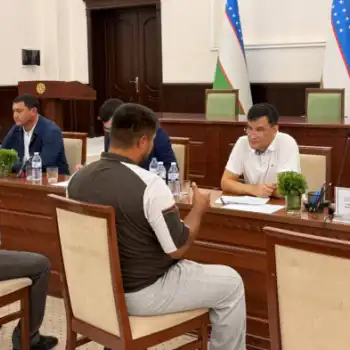
To ensure the fulfillment of the assigned tasks, on July 23 of this year, a working group consisting of the Chairman of the Board, the Deputy Chairman of Microcreditbank, and Head Bank employees arrived in the Bukhara region. Within the framework of the visit, an expanded meeting was held under the leadership of A. Makhamatov, Chairman of the Entrepreneurship Development Company assigned to the region, and B. Zaripov, Khokim of the region, where specific tasks were set for the responsible officials. By order of the regional khokimiyat, heads of the economic complex were assigned to these 69 mahallas, and a special regional headquarters was established.
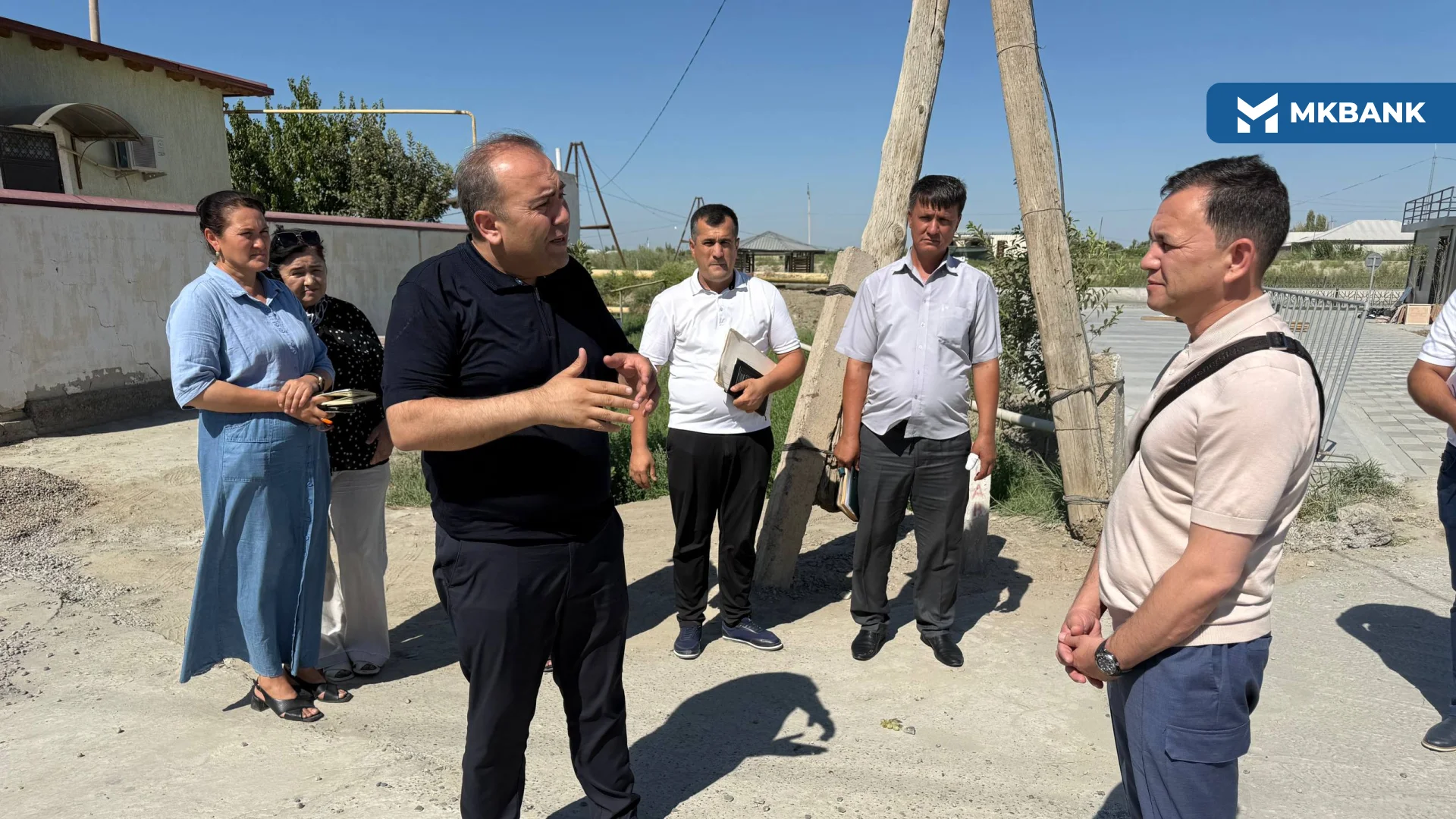
On July 23-24, the working group conducted preliminary studies in the Karakul, Gijduvan, and Shafirkan districts. For example, the "Chekirchi" mahalla in the Karakul district, with 1,002 households and 4,002 residents, was included in the list because its specialization level is below 35 percent. The main driver of this mahalla, located in the district center, is trade and services.
The mahalla also possesses significant educational potential: an average of 6,600 applicants study at 18 training centers in the district annually, of whom 5,600 come from other regions and live here for 10 months. The working group continues to take measures to remove mahallas from the "low" category by developing such specific drivers.
The current situation in the "Chekirchi" mahalla was analyzed, and specific proposals were put forward to legalize the informal services sector in the area. It is known that there is a high demand for concessional loans for the reconstruction and equipping of rental houses and training centers in the district in accordance with established standards.
In this regard, due to the high demand for loans in cash, it is proposed to apply compensation from the Entrepreneurship Development Company for loans allocated to the service sector under the "Mahalla Project" program (currently, this compensation is applied only to production and processing areas).
As a result of the implementation of this proposal, the economic turnover of 113.4 billion soums annually formed in the district will be attracted to the official economy. This will ensure additional revenues of 10–15 billion soums to the local budget, expand the service sector, and create 150 new jobs and 60 business entities.
During the study, the next destination was the "Solur" mahalla, which borders the Jondor district and specializes in farming as a driver. This mahalla is included in the list of "low" category mahallas due to the level of specialization below 35 percent (19 percent). Today, there are 775 households in this mahalla, in which 4,200 people live.
Although the area of household plots in the mahalla is 114 hectares, and land plots leased for use are 17 hectares, these lands are currently not being used effectively for growing high-yielding and export-oriented crops. In order to increase economic indicators in the region, it was decided to use the experience of the neighboring "Shurrobot" mahalla. For information, the "Shurrobot" mahalla specializes in strawberry cultivation (54%), and local farmer Alisher Rajabov grows strawberries on the basis of cooperation on 5 hectares of land leased to 12 citizens.
Following this successful experience, it is planned to specialize the Solur mahalla in strawberry cultivation. As a first step, the "Victoria" strawberry variety was planted in a greenhouse on 10 acres of a 2-hectare leased land plot and on 1.9 hectares of open land.
For the full development of the mahalla, the following proposal is put forward:
- Establishment of a strawberry cluster on 10 hectares of leased land based on a cooperation system with the assistance of "Agrostar." This involves involving landowners in cooperation, implementing intensive technologies and drip irrigation systems, supplying high-quality seedlings, and forming a value chain for product storage and sale.
- It is also planned to organize strawberry greenhouses in 300 households in the mahalla based on the "One Mahalla - One Product" principle and promotion.
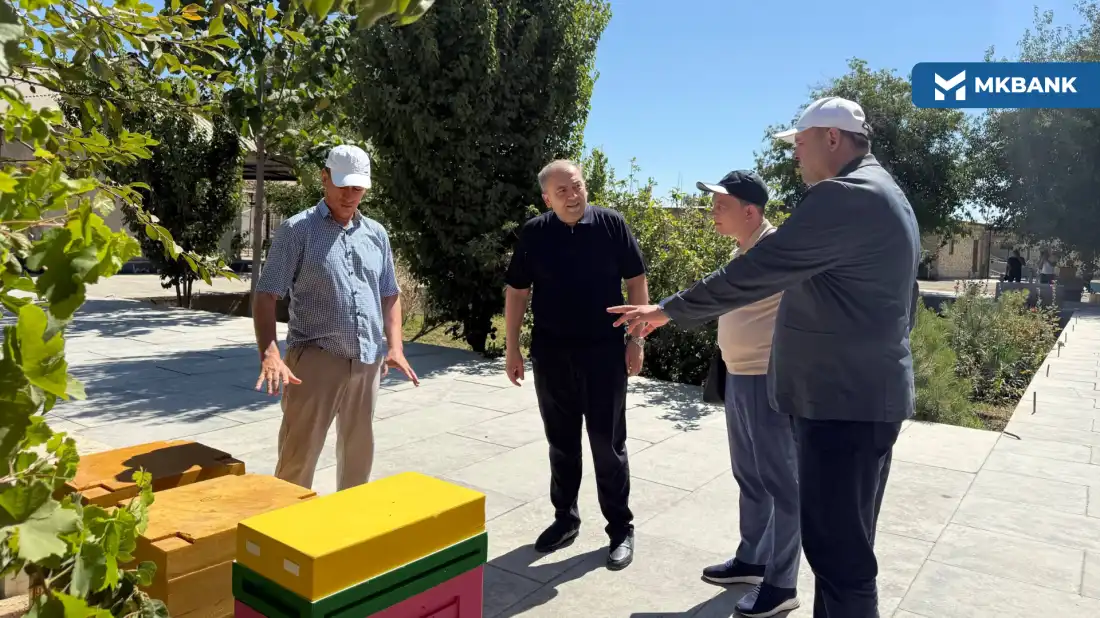
The next destination of the working group was the "Jigachi" mahalla, which specializes in beekeeping and where about 100 households are engaged in honey production. The bank has taken systemic measures to further expand this potential in the mahalla and increase public income.
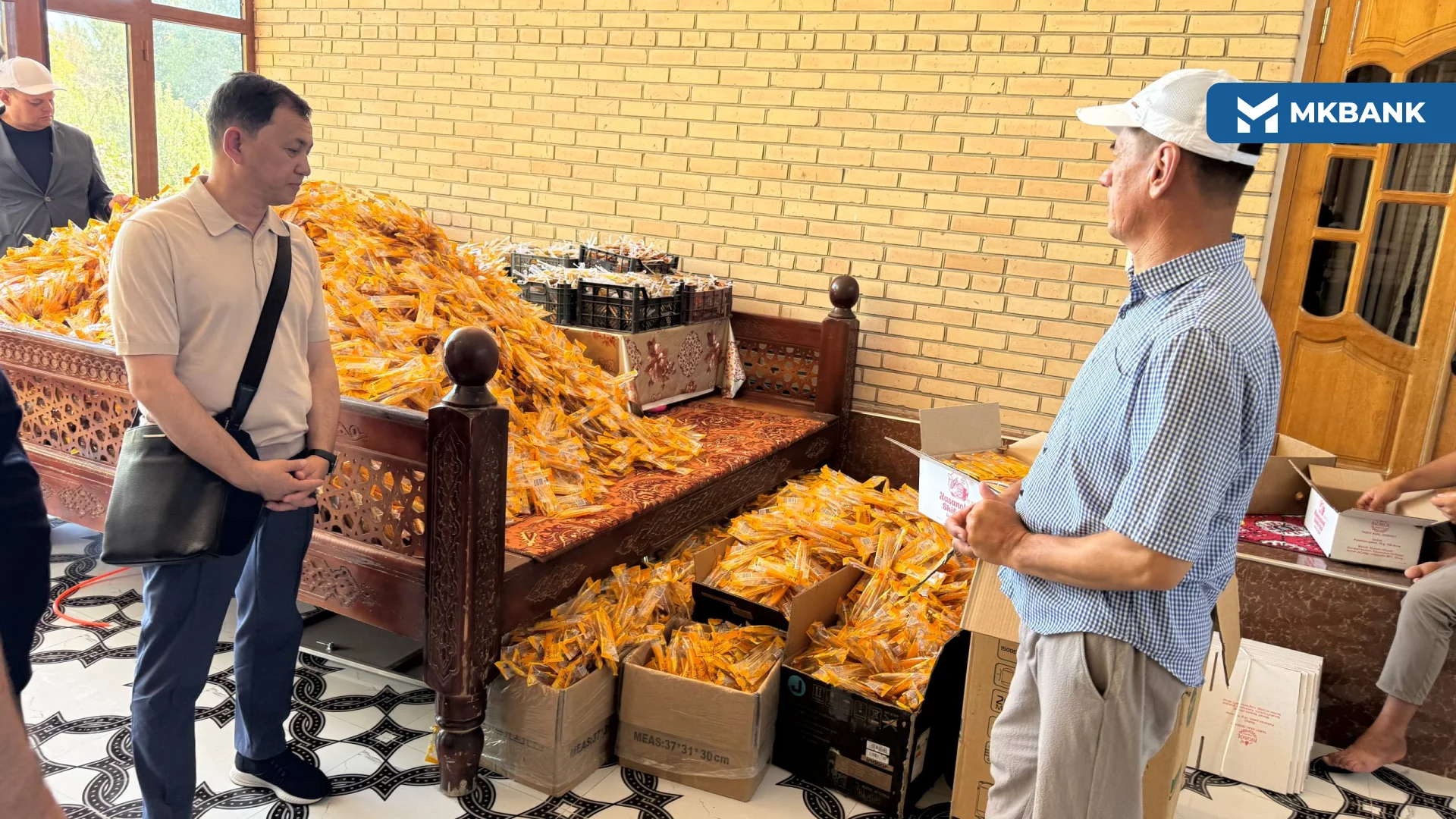
Specifically, at the initiative of Microcreditbank, 700 million soums in credit funds were allocated to the region's leading entrepreneur, the "Khasanobod Shifo Bol" farm, for a project to involve the population in beekeeping based on cooperation. Additionally, under the bank's auspices, 100 beehives were distributed free of charge to 10 low-income households in the mahalla.
As a result of the practical work carried out, 50 households have been successfully united into a single cooperative. A system for processing and packaging honey grown by the farm has been established, and a new local brand, "Biobol Organic," has been created. Currently, the enterprise produces 10.5 tons of high-quality honey per year and delivers it to consumers in packaged form.
Such cooperation models demonstrate high efficiency in ensuring employment and attracting the population to gainful work in mahallas of the "low" category.
At the same time, it is planned to organize a modern "Micro-center" on 0.9 hectares of the former MMTP building in the mahalla. 4.2 billion soums were allocated from the republican budget under the "Driver" project program to build the project's infrastructure.
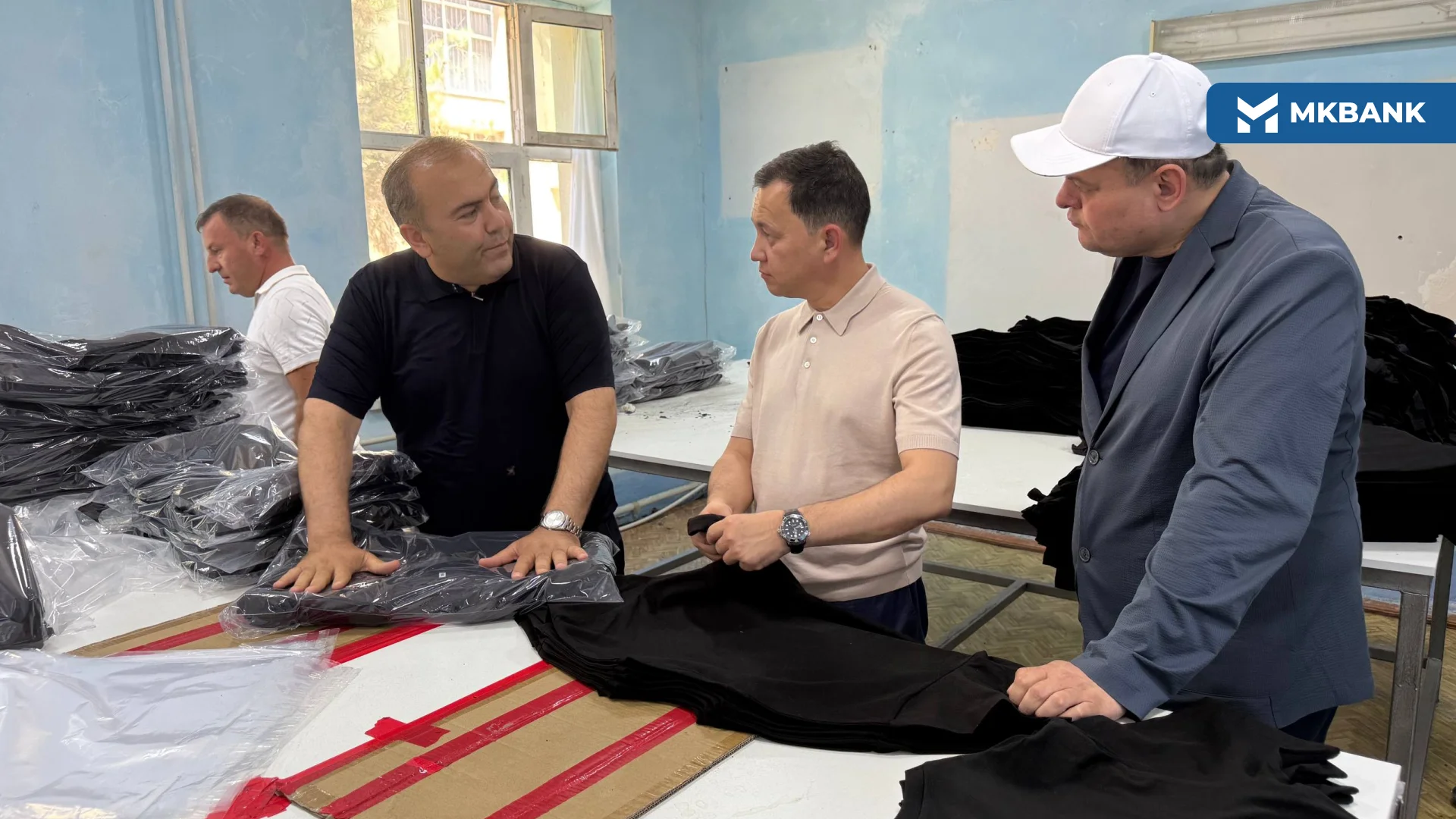
In order to effectively organize the activities of this micro-center, an important proposal was put forward: on the initiative of Mikrokreditbank, 38 trade and 19 service facilities will be built in the area through MKB Kasana Invest Group LLC. These ready-made objects will be sold to entrepreneurs on the terms of a servicing mortgage on a long-term basis.
As a result of the implementation of this system, the "Jigachi" mahalla will become a major trade and service center for four neighboring mahallas. Additionally, 60 new business entities will be established in the region, creating an additional 180 new jobs.
Systematic studies and practical measures initiated in 69 "low" category mahallas of the Bukhara region have become an important step in identifying specific "driver" areas of the regions. The service sector in the "Chekirchi" mahalla, the strawberry cooperative in the "Solur" mahalla, and the beekeeping and modern garment industry in the "Jigachi" mahalla are clear examples of this.
Thanks to ongoing infrastructure transformations, the creation of "Micro Centers," and new financial instruments offered by Microcreditbank (service mortgages, compensations), these difficult neighborhoods will soon become points of sustainable economic growth. This, in turn, will serve to reduce poverty in the region, support hundreds of new business entities, and create decent jobs for the population.
Bank Information Service
See also

Projects aimed at increasing public income are being expanded in Arnasoy.

Reading Hour: Harmony of Work and Thinking
Another interesting aspect of the event was that the participants read excerpts that left a deep impression on them.